
Hangars are large spaces that require careful consideration when it comes to lighting. Proper lighting is necessary not only to ensure the safety and visibility of workers but also to make sure that maintenance tasks, inspections, and operations can be carried out effectively. When deciding how many lights are needed, there are several factors that must be considered, including the size of the hangar, the height of the ceiling, the type of work being done, and energy efficiency. This guide will explore how to determine the number of lights that will provide the best possible lighting for a hangar.
Determining the Right Number of Lights
Understanding Hangar-Specific Lighting Needs
Figuring out how many lights are required to properly illuminate a hangar involves a balance of technical insight, real-world evaluation, and adherence to lighting design principles. No two hangars are exactly the same. Variations in structure, ceiling height, interior materials, and function all influence how lighting behaves in the space. Lighting that’s effective in a compact storage hangar may not meet the demands of a large aircraft maintenance facility. Without a tailored plan, a hangar can end up either underlit—resulting in visibility issues—or overlit, which causes glare and wastes energy.
Assessing Physical and Functional Attributes
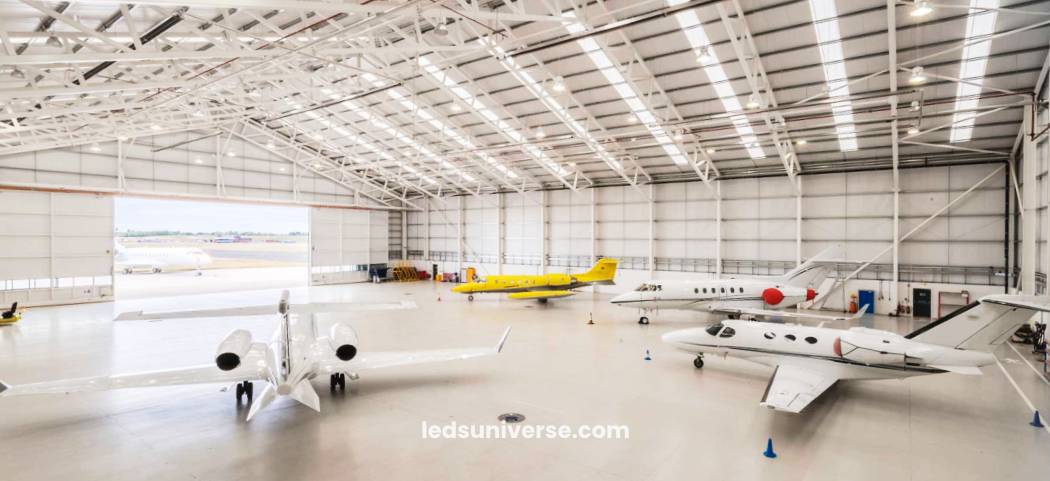
Before deciding how many fixtures are needed, several key aspects of the hangar must be examined. The total square footage is one of the first measurements to consider. A small general aviation hangar might be 3,000 to 5,000 square feet, while larger maintenance hangars can exceed 50,000 square feet. The mounting height is another vital factor, typically ranging from 20 to 60 feet, which directly affects fixture type, beam angle, and light spread.
The internal layout also matters. A hangar used to store aircraft will have a very different light distribution requirement than one where technicians carry out complex repairs or inspections. For example, a general storage hangar might need an average of 30 to 50 foot-candles (fc), whereas maintenance areas may demand 100 fc or more to ensure task visibility. The layout of structural beams, cranes, and tall equipment can create shadows or obstruct light, which calls for strategic placement to avoid uneven coverage.
Using Lighting Simulation and Design Tools
Professionals typically turn to lighting simulation software or online calculators to help quantify fixture requirements. These tools let designers input room dimensions, ceiling heights, and reflectance values for walls and floors. They also model how fixtures with specific lumen outputs, color temperatures, and beam spreads will perform within a space.
For example, a 50,000-square-foot hangar with a 40-foot ceiling might need around 80 to 100 LED high bays, each rated at 35,000 to 45,000 lumens, to achieve the desired brightness. If mounted at 40 feet, a 45,000-lumen fixture might deliver approximately 35–40 fc across open floor areas, depending on reflectance. The software helps pinpoint shadow-prone zones, ensures light is evenly spread, and provides energy-use estimates, minimizing trial and error.
Factors Affecting the Number of Lights
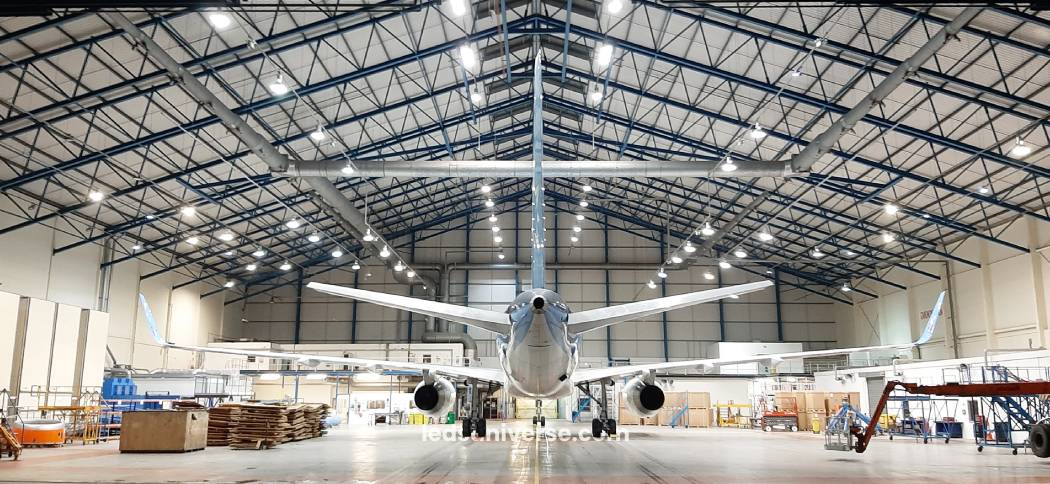
Before determining how many lights a hangar needs, it’s helpful to evaluate a combination of physical, functional, and environmental factors. Lighting a hangar isn’t simply a matter of installing enough fixtures to brighten the space; it’s about creating a balanced environment that supports the daily operations carried out within. Variables such as the hangar’s dimensions, ceiling height, surface reflectivity, interior layout, and purpose all come together to influence how light behaves in the space. Considering these aspects during the design phase can lead to a more efficient layout and better visual comfort for everyone working in the hangar.
Size of the Hangar
The overall square footage of the hangar has a direct impact on the total number of lights required. A small private hangar for one or two aircraft might require around 20 to 40 lights, whereas a commercial or military hangar spanning tens of thousands of square feet could need 200 to 500 fixtures or more. The larger the space, the more surface area there is to illuminate, which generally translates to a greater number of lighting fixtures. Designers often start with the total area and apply recommended lighting standards, expressed in foot-candles, to estimate the baseline illumination. From there, they adjust based on ceiling height, work tasks, and fixture performance. In rectangular or irregularly shaped hangars, more care must be taken to ensure light coverage reaches into every corner without creating hotspots or dark zones.
Height of the Ceiling
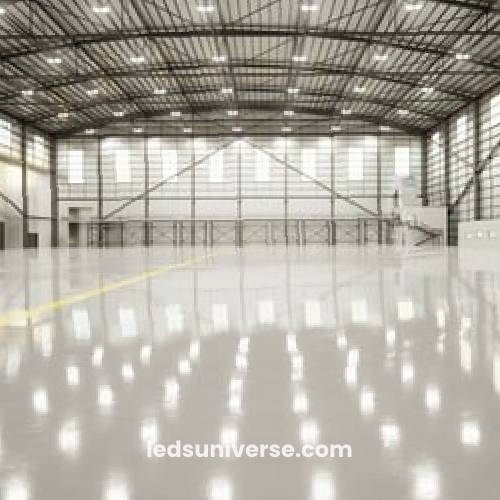 Ceiling height plays a major role in how light travels through the air and reaches the surfaces below. Hangars often feature very tall ceilings, sometimes exceeding 30 to 50 feet (9 to 15 meters), to accommodate aircraft of various sizes, meaning fixtures are mounted far from the ground. As the distance between the light source and the working plane increases, more powerful lights or higher mounting angles may be needed to achieve even illumination.
The beam spread of each fixture also becomes more relevant as height increases—too narrow a beam may result in focused bright spots, while too wide a beam may cause inefficient coverage. Some fixtures are designed specifically for high-bay applications, distributing light evenly across large distances without creating glare. Factoring in ceiling height early in the design ensures that the chosen lights will perform effectively at those elevations, avoiding shadows or dim zones that could interfere with visibility and workflow.
Type of Work Performed
The nature of the tasks taking place inside the hangar can dramatically affect lighting needs. Precision activities, such as aircraft inspection, avionics work, and repairs, require higher levels of light—often necessitating additional task lighting of 50 to 100 fixtures in critical zones—to ensure clarity and attention to detail. These zones benefit from task lighting or fixtures with high color rendering to distinguish fine differences in materials, surfaces, and components. In contrast, areas designated for storage, parking, or equipment staging may only require moderate light levels, focused more on general visibility than detailed work, typically needing fewer than 30 to 50 lights depending on space size.
If the hangar is used around the clock or for shift work, lighting might also need to compensate for fatigue and changing light conditions throughout the day. In multifunctional hangars where different types of work occur side-by-side, designers may segment the space and apply different lighting strategies to match each zone’s function. This approach not only supports productivity but also enhances comfort for those working long hours in demanding conditions.
Lighting Types and Their Role in Hangar Design
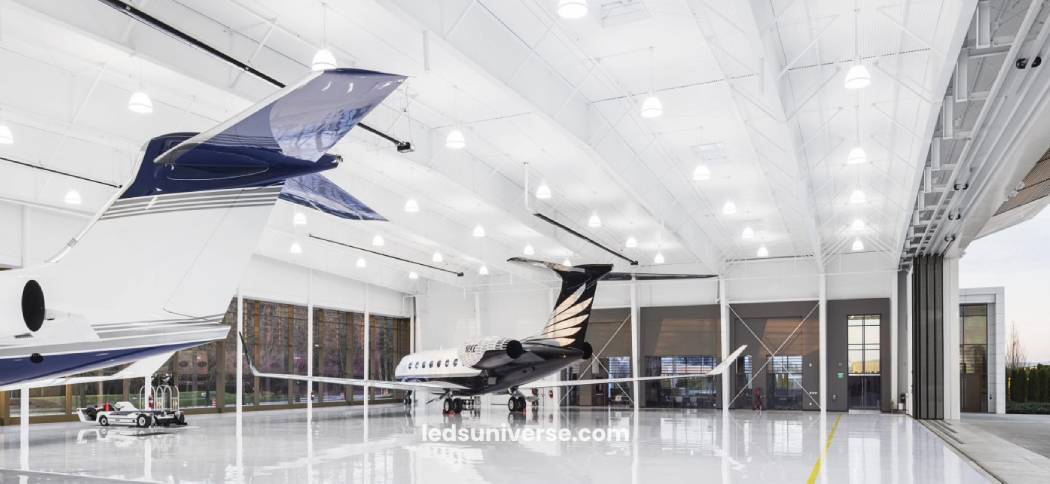
Different types of lighting can be used in a hangar to achieve specific lighting effects and coverage. Each lighting option has distinct advantages, and choosing the right one depends on factors like the layout of the space, the work being done, and the desired level of brightness.
Fluorescent Lights
Fluorescent lights have been a popular choice for hangars for many years due to their ability to provide bright, even lighting. They are relatively energy-efficient compared to traditional incandescent bulbs, making them a cost-effective option for larger spaces. A typical mid-sized hangar might use 80 to 150 fluorescent fixtures to achieve uniform coverage. However, fluorescent lights may not be as effective for spaces with high ceilings (above 25 feet), as their light can become diffused and may not reach the floor with enough intensity. Additionally, their lifespan is generally shorter than LED lights, which may result in higher maintenance costs in the long run.
LED Lighting
LED lighting is an increasingly popular choice for hangars, thanks to its energy efficiency, longevity, and ability to produce bright, focused illumination. LEDs are available in a variety of intensities and configurations, allowing for flexible design. These lights are ideal for areas with high ceilings (often 30 to 50 feet or more) and can be strategically placed in quantities ranging from 150 to 400 fixtures to ensure even distribution of light across the hangar. Although LED lights may come with a higher initial cost compared to other options, their long lifespan and low energy consumption can provide substantial savings over time.
Metal Halide Lighting
Metal halide lights are another option for hangars, particularly when high-intensity lighting is required. These lights provide a bright, white light that closely mimics natural daylight, which is beneficial for tasks requiring precision. A typical hangar might employ 100 to 200 metal halide fixtures depending on size and layout. However, they tend to consume more energy than LED lights and may take some time to reach their full brightness. Metal halide lights also have a shorter lifespan than LEDs, which could lead to more frequent replacements and higher maintenance costs.
Lighting Layout and Placement Considerations
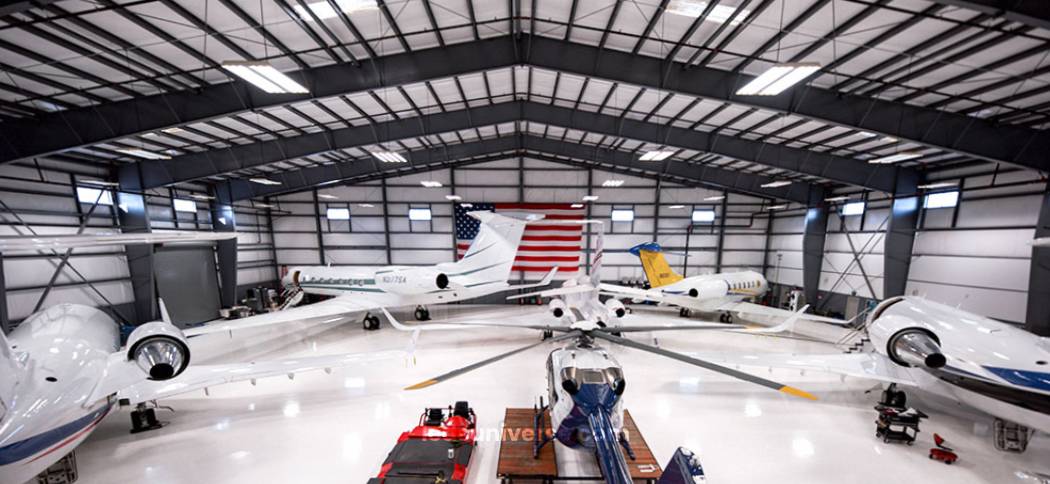
Designing the layout and determining the placement of lighting in a hangar goes beyond selecting the right fixtures. Thoughtful arrangement of lights can enhance visibility, improve work accuracy, and support a more comfortable environment for staff. Hangars are typically large and open, which means improper lighting placement can lead to dark corners, unwanted glare, and wasted energy. By considering the dimensions of the space, ceiling height, and intended tasks, a balanced lighting scheme can be developed that meets operational needs without overloading the system. A well-planned layout not only contributes to effective lighting but also ensures that the entire area is used efficiently.
Spacing Between Lights
The spacing between light fixtures has a direct impact on how evenly the light spreads across the hangar floor. If fixtures are too widely spaced, uneven brightness can occur, leaving certain areas underlit and potentially hindering productivity. On the other hand, placing lights too close together can create overlapping beams that lead to hot spots, glare, or uncomfortable brightness levels. The ideal spacing is often determined by the height of the ceiling, the beam angle of the lights, and the lumen output of each fixture. For high-ceilinged hangars, wider spacing with higher-output lights may mean having around 15 to 25 feet between fixtures, which typically results in 200 to 400 lights distributed evenly in a large hangar. Whereas smaller or lower-ceiling hangars might use spacing as close as 10 to 15 feet, with fewer lights overall, around 40 to 80 fixtures.
Light Intensity and Distribution
Light intensity refers to how brightly a fixture illuminates an area, while distribution is about how that light spreads from the source. In a hangar environment, getting both of these aspects right is key to achieving the desired lighting conditions. Areas that involve technical tasks, such as repairs or inspections, will need lights that emit higher levels of brightness with a narrower focus to avoid shadows and highlight fine details. These zones may require an additional 50 to 100 task-specific fixtures, focused directly on workstations or inspection areas. In contrast, areas used for general movement or storage can be illuminated with lights that have a wider spread and lower output, often covered by the general layout of 100 to 300 fixtures depending on hangar size. Choosing the correct fixtures means balancing brightness with coverage—ensuring each zone receives enough illumination without excessive concentration or waste. Adjustable or directional lighting can also be used to fine-tune the focus, particularly for workstations or hard-to-reach spaces.
Lighting for Specific Zones
Hangars often serve multiple functions within a single space, which makes a uniform lighting approach less effective. Dividing the area into functional zones allows for tailored lighting strategies that match the needs of each section. Work zones where precision tasks are carried out may benefit from task lighting with higher color rendering and sharper focus, generally requiring dedicated lighting installations of 30 to 70 fixtures. Walkways, storage racks, and less active areas can be illuminated with ambient lighting that offers a broader, softer distribution, often accounted for within the main lighting grid of 150 to 300 fixtures. Additionally, incorporating controls such as dimmers or motion sensors in certain zones allows for flexibility based on usage patterns throughout the day. This kind of zoning not only enhances the usability of each area but also helps conserve energy and reduce strain on lighting systems. When each section is lit based on its specific purpose, the entire hangar becomes a more productive and functional workspace.
Energy Efficiency and Cost Considerations
When determining how many lights are required for a hangar, it is also important to consider the energy consumption and long-term costs associated with the lighting system. Since hangars tend to be large spaces that require sustained lighting, choosing energy-efficient options can lead to substantial savings over time.
Energy-Saving Lighting Solutions
LED lights are an excellent choice for energy efficiency. They consume significantly less energy than traditional incandescent or fluorescent lights while providing the same or better lighting output. Over the lifespan of the lights, the savings on electricity bills can be considerable. Additionally, LEDs generate less heat, which can be a factor in keeping the hangar environment comfortable for workers.
Maintenance Costs
Energy-efficient lighting options, such as LEDs, generally have a longer lifespan compared to other types of lighting. This translates into fewer replacements and less maintenance. Given that hangars are large spaces and often require lights that are positioned high up, regular maintenance can be costly and time-consuming. By investing in durable lighting solutions, the need for maintenance and replacements can be reduced, leading to long-term savings.
Conclusion
The right number of lights for a hangar is determined by several factors, including the size and layout of the space, the type of activities performed, and the type of lighting selected. A combination of lighting solutions, carefully placed and properly spaced, will ensure that the hangar is adequately illuminated for safety and efficiency. By considering energy-efficient options and planning for long-term maintenance, hangar lighting can be both effective and cost-efficient. The ultimate goal is to create a well-lit environment that supports daily operations and enhances the safety and productivity of the workers in the hangar.