
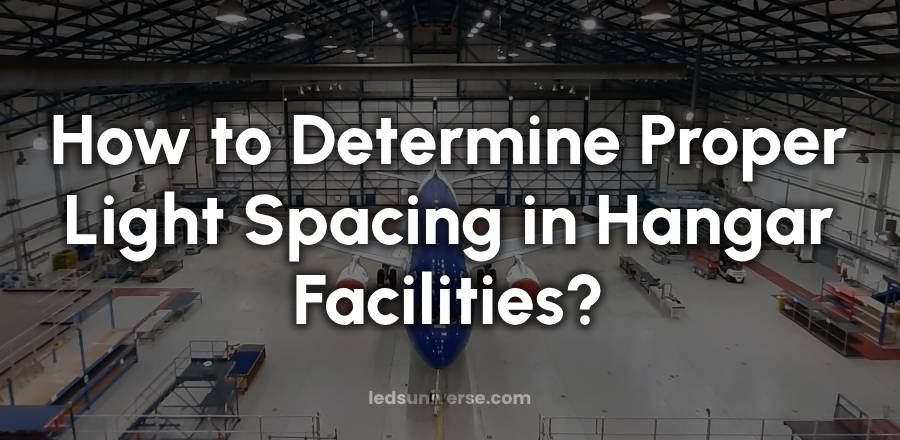
These large, often complex structures serve as places for aircraft maintenance, storage, and other aviation-related tasks, where adequate visibility is necessary. Determining the right spacing between light fixtures is a balance of science, practical experience, and adapting to the unique conditions of the hangar environment. Understanding how to evaluate these factors can greatly enhance operational effectiveness and reduce maintenance and energy costs.
Common Practices for Light Spacing
Designing the spacing of lights in hangar facilities follows industry patterns shaped by fixture technologies, hangar characteristics, and the activities performed inside. While specific spacing must be tailored to each project, general practices provide a useful foundation for effective lighting layouts.
| Lighting Type / Condition | Mounting Height (ft) | Typical Spacing Range |
|---|---|---|
| LED High-Bay Fixtures | 30–50 | 1.5–2 × mounting height |
| LED (at 40 ft example) | 40 | 60–80 ft |
| Fluorescent Fixtures | Varies | Less than 1.5–2 × mounting height |
| HID Fixtures (e.g., metal halide) | Varies | Denser than LED |
| Task/Inspection Zones | Any | Closer spacing than general areas |
| Storage/Circulation Zones | Any | Wider spacing |
| Ceiling Height Impact | 30 | Up to 2 × mounting height (≈ 60 ft) |
| Ceiling Height Impact | 50 | 1.5 × or less (≈ 75 ft or closer) |
Typical Spacing Guidelines for LED High-Bay Fixtures
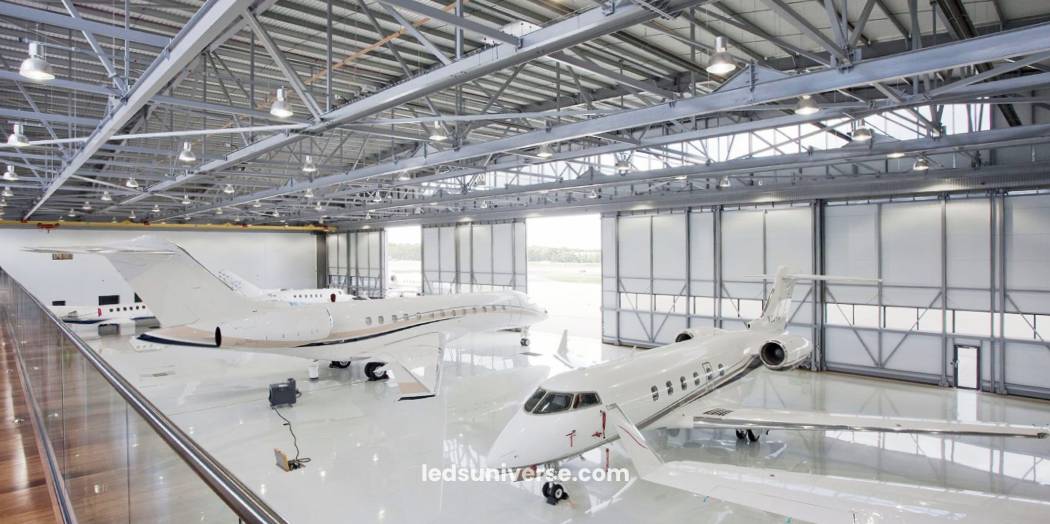
LED high-bay fixtures have become the preferred choice for modern hangars due to their efficiency, long life, and directional light output. When used in hangars with ceilings ranging from 30 to 50 feet, the spacing of these fixtures generally falls between 1.5 to 2 times the mounting height.
For example, if fixtures are mounted at a height of 40 feet, designers often space them approximately 60 to 80 feet apart. This range takes advantage of the LED’s focused beam angle and high lumen output, allowing for even illumination across the floor with fewer fixtures than older technologies.
This spacing also supports energy savings because fewer fixtures operate at higher efficiency, reducing both electricity consumption and maintenance demands.
Variations Based on Beam Angle and Wattage
The beam angle of a fixture influences the width of the light spread and therefore the spacing distance. Narrower beam angles concentrate light in smaller areas, requiring closer fixture placement to avoid dark zones. Wider beam angles distribute light more broadly, permitting greater spacing.
Fixture wattage and lumen output also affect spacing. Higher wattage LEDs with greater light output can be spaced farther apart while maintaining required illumination levels. Designers balance beam angle and wattage to optimize both spacing and light uniformity.
Spacing Practices for Fluorescent Fixtures
Fluorescent lighting, while less common in new hangar installations, remains in use in many facilities. These fixtures typically emit light in a more diffuse manner and produce lower lumen outputs compared to LEDs.
Because of their diffuse light spread and lower intensity, fluorescent fixtures generally require closer spacing. This helps prevent uneven lighting and ensures that work areas receive adequate illumination. Typical spacing might be less than the 1.5 to 2 times mounting height ratio used for LEDs, depending on fixture specifications.
Considerations for High-Intensity Discharge (HID) Lighting
HID lighting technologies, including metal halide and high-pressure sodium lamps, were historically common in hangar lighting. These fixtures produce high lumen outputs but have broader beam spreads and longer warm-up times.
Due to their light distribution characteristics, HID fixtures often require denser placement than LEDs. The spacing must account for the need to minimize shadows and glare, which can be challenging with their less directional light.
Additionally, because HID lamps degrade over time, their initial spacing must factor in lumen depreciation to maintain consistent illumination throughout their service life.
Adjusting Fixture Spacing for Specific Hangar Zones
Different areas within a hangar require tailored lighting approaches. Maintenance bays and inspection zones, where detail-oriented work occurs, often demand higher illumination levels and minimal shadows. Consequently, fixtures in these zones are spaced closer together.
Supplementary task lighting can be deployed in critical areas to enhance visibility without increasing the overall fixture count. Adjustable or directional fixtures offer flexibility, allowing precise illumination where needed.
In contrast, general storage or circulation zones require moderate lighting and can accommodate wider fixture spacing. This zoning approach balances lighting quality with cost-effectiveness and energy efficiency.
Using Layered Lighting Strategies
Many hangars benefit from layered lighting, combining general overhead illumination with task-specific lights. This approach allows designers to space general fixtures for broad coverage while using focused lights in high-demand areas.
Layered lighting can reduce the number of general fixtures needed, as task lights supplement illumination only where necessary. It also provides flexibility, enabling operators to adjust lighting levels depending on activity.
Impact of Ceiling Height on Common Spacing Practices
Lower ceilings permit fixtures to be spaced further apart since light intensity diminishes less over distance. High ceilings require closer spacing or higher-output fixtures to overcome light loss.
For example, in a hangar with a 30-foot ceiling, fixture spacing might approach 2 times the mounting height. At 50 feet, spacing could shrink to 1.5 times the mounting height or less, depending on fixture performance.
Practical Experience and Manufacturer Recommendations
Many designers consult fixture manufacturers for spacing guidance based on photometric data and real-world experience. Manufacturer recommendations consider fixture-specific beam patterns, lumen output, and efficiency, helping optimize spacing for particular models.
Experienced designers also rely on case studies and previous installations to refine spacing layouts. Combining these resources with simulation tools leads to more reliable lighting outcomes.
Balancing Lighting Quality and Energy Efficiency
Common practices aim to find a balance between delivering adequate illumination and controlling energy use. Overly dense fixture spacing can produce glare, increase installation costs, and waste power. Too sparse spacing risks uneven lighting and safety hazards.
Adhering to spacing ranges derived from fixture capabilities and hangar characteristics helps maintain this balance. Incorporating controls such as dimmers and occupancy sensors further enhances efficiency.
Process for Implementing Proper Light Spacing
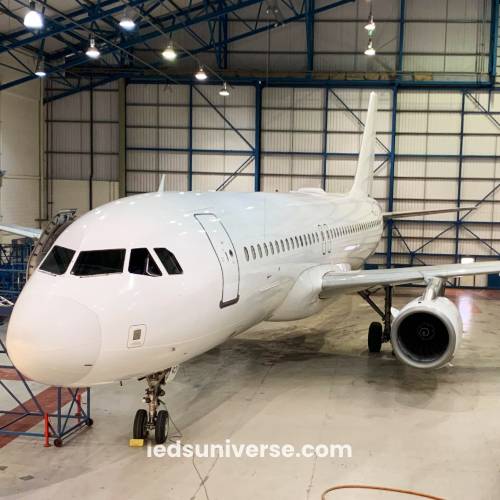
Determining and installing the correct light spacing in hangar facilities involves a multi-step process that balances technical evaluation, design planning, and practical installation considerations. This process unfolds in phases, each building on the last to ensure that the final lighting layout performs well under operational conditions.
Initial Assessment of Hangar Dimensions and Lighting Needs
The process begins with a sessment of the hangar’s physical characteristics. This includes detailed measurements of the floor area and ceiling height, which influence the number of fixtures required and their mounting positions. Large hangars with high ceilings often need powerful lighting and wider spacing, whereas smaller or lower spaces require a different approach.
Identifying zones where specific activities occur—such as maintenance bays, storage areas, and office spaces—helps in defining lighting needs. Each zone may demand different levels of illumination and uniformity, impacting fixture placement and spacing.
In addition to physical dimensions, the nature of tasks carried out within the hangar shapes the lighting design. For example, maintenance activities require higher light levels and minimized shadows for detailed inspection work. Conversely, storage zones might function well with moderate lighting.
Gathering Photometric Data and Manufacturer Consultation
Following the initial assessment, the next step involves selecting suitable lighting fixtures. Consulting lighting manufacturers provides access to photometric data, which describes how each fixture distributes light. This data is critical for understanding beam angles, intensity, and coverage patterns.
Manufacturers can also recommend fixture types and wattages suited to the hangar’s size and task requirements. This consultation helps narrow down the options to those that can deliver the required illumination while maintaining energy efficiency.
Photometric data guides decisions about spacing by predicting how much light reaches the floor at different distances from each fixture. Fixtures with narrow beam angles may require closer spacing to avoid dark spots, while those with broader beams can be spaced farther apart.
Using CAD and Lighting Simulation Tools for Layout Planning
Once fixture options are identified, layout planning begins. Computer-aided design (CAD) software is often employed to create accurate, scaled drawings of the hangar space. Lighting simulation tools integrated with CAD allow designers to virtually place fixtures and simulate light distribution.
These simulations provide visual maps of illumination levels across the hangar floor. By adjusting fixture placement and spacing, designers can observe changes in uniformity, brightness, and glare. This iterative process helps achieve a layout that meets lighting criteria for each zone.
Simulation tools also consider factors such as fixture mounting height and beam spread, enabling designers to experiment with different configurations before finalizing plans. This reduces the risk of costly mistakes during installation.
Refining Spacing Based on Simulation Results
Simulation outcomes often require adjustments. If simulations reveal dark areas or uneven lighting, fixtures might be moved closer together or replaced with higher output models. Conversely, if some areas appear excessively bright or glaring, spacing can be increased or beam angles modified.
This refinement process balances providing adequate illumination with minimizing energy use and avoiding visual discomfort. The goal is a smooth transition of light intensity across the entire hangar floor, supporting various tasks and maintaining visual comfort.
Developing a Detailed Installation Plan
After simulations confirm an effective spacing layout, a detailed installation plan is developed. This plan includes exact fixture locations, mounting heights, wiring routes, and control system details. Coordination with electricians and facility managers ensures practical installation.
Mounting height is particularly important since it influences both lighting performance and maintenance access. Fixtures should be installed at heights that optimize illumination while allowing safe access for cleaning or repairs.
The installation plan also considers safety regulations and any special requirements related to the hangar environment, such as explosion-proof fixtures in hazardous zones or compliance with aviation lighting standards.
Executing Installation with Precision
Proper mounting heights and fixture orientations must be maintained to achieve the predicted lighting performance. Attention to wiring, fixture alignment, and secure mounting ensures durability and safety.
Any deviations from the plan, whether due to structural constraints or unforeseen obstacles, should be documented and addressed promptly. Installer feedback may also identify opportunities for minor adjustments that improve overall lighting.
Post-Installation Measurement and Verification
Once installation is complete, measuring actual light levels is the next phase. Specialized instruments measure illuminance at various points on the hangar floor and compare these readings to the target levels established during design.
If measurements indicate discrepancies, adjustments can be made. These may include repositioning fixtures, changing lamp wattage, or modifying control settings such as dimming levels. The goal is to align real-world performance with design expectations.
This verification phase ensures that the lighting system delivers consistent, uniform illumination that supports hangar operations safely and efficiently.
Ongoing Monitoring and Maintenance
Lighting needs may evolve as hangar usage changes or as equipment ages. Continuous monitoring helps identify declines in performance, such as reduced brightness from aging lamps or accumulation of dirt on fixtures.
Regular cleaning of fixtures prevents dust buildup that diminishes output. Timely replacement of lamps and components maintains consistent illumination levels.
Facility managers should periodically review lighting effectiveness and make adjustments when necessary. This proactive approach extends fixture life and maintains operational safety and comfort.
Incorporating Lighting Controls and Automation
Adding controls such as occupancy sensors, daylight dimming, and scheduling systems can enhance lighting efficiency and adaptiveness. These systems may require adjustments to fixture placement or grouping to function optimally.
Integrating lighting controls during the planning phase ensures that the spacing layout supports automation features. For example, fixtures grouped by zones can be controlled independently, enabling energy savings without compromising visibility.
Automation also simplifies maintenance by alerting managers when lamps need replacement or when lighting patterns deviate from programmed settings.
Reviewing Regulatory Compliance Throughout the Process
Throughout the entire process, compliance with applicable aviation, safety, and electrical codes should be maintained. Regulations often dictate minimum illumination levels, fixture types, and installation methods specific to hangar environments.
Regular consultation with regulatory bodies or industry experts helps ensure that the lighting design and installation remain aligned with current requirements. Noncompliance can lead to operational restrictions or increased risk.
Understanding Hangar Lighting Needs
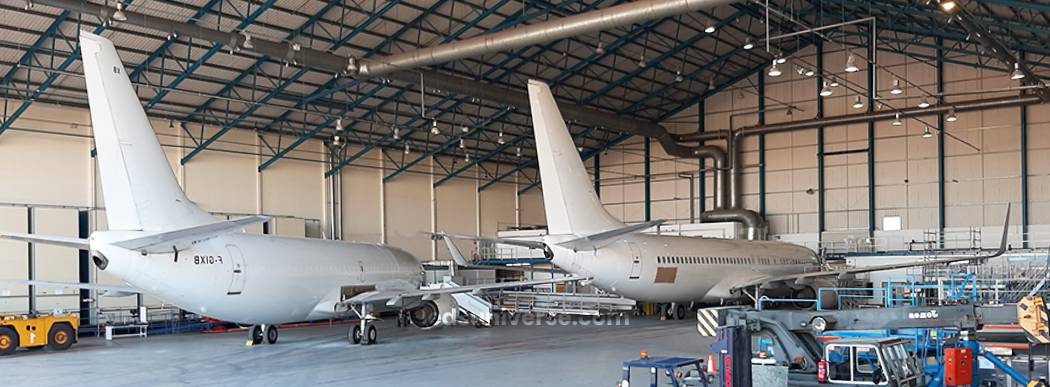
Hangar facilities serve diverse functions that shape their lighting demands. The lighting approach must accommodate different activities, spatial characteristics, and operational goals to provide an environment conducive to both safety and productivity.
Variety of Activities Within Hangars
Maintenance work is perhaps the most demanding in terms of lighting. Technicians and engineers perform intricate inspections, repairs, and assembly tasks that require bright and consistent illumination to clearly identify small parts, wiring, and critical details. In these areas, insufficient lighting can lead to mistakes, delays, or safety risks.
Storage sections within hangars serve a different purpose. These areas typically involve the movement and storage of parts, tools, or even aircraft themselves. Lighting here needs to ensure safe navigation and general visibility but does not require the same intensity or focus as maintenance zones.
Circulation spaces such as walkways and vehicle paths within the hangar also have their own requirements. They must be lit well enough to prevent accidents and support efficient movement but can often use moderate illumination levels compared to task-specific zones.
Challenges of Lighting Large Volumes and High Ceilings
Hangars are characterized by large open spaces with high ceilings, sometimes exceeding 50 feet. This architectural scale introduces challenges in distributing light evenly across the floor and work surfaces. The volume of air and absence of internal walls allow light to disperse widely, which can create uneven brightness and shadows if lighting is not carefully planned.
High ceilings affect how light travels from fixtures to the floor. The greater the distance, the more light intensity diminishes. This natural loss requires either more powerful lighting or fixtures spaced closer together to maintain desired illumination levels.
The sheer size of hangars often means that a large number of fixtures are required, increasing installation and maintenance complexity. Balancing fixture quantity with light quality and energy consumption becomes a major consideration.
Lighting Standards for Aviation Environments
Industry standards offer guidance on illumination levels suitable for various hangar activities. Organizations such as the Illuminating Engineering Society (IES) and aviation regulatory bodies publish recommendations that help designers match lighting to functional needs.
These standards emphasize achieving uniform lighting to reduce shadows and glare, both of which can hamper visibility and create unsafe conditions. Uniformity helps maintain consistent visual cues across the space, aiding both routine tasks and emergency situations.
Recommended brightness levels vary by area. Maintenance bays often require illumination levels exceeding 300 lux, while storage or circulation zones may function well with 100 to 200 lux. These benchmarks provide a foundation but must be tailored to specific hangar characteristics.
Impact of Hangar Size and Layout on Lighting
The physical size of the hangar strongly influences lighting design. Smaller hangars with lower ceilings can achieve uniform lighting with fewer fixtures spaced farther apart. Larger hangars, however, may require increased fixture density or specialized lighting solutions to avoid dark zones.
Open floor plans without internal partitions allow for more flexible fixture placement, but irregular shapes or segmented areas may need customized lighting zones. Areas dedicated to maintenance might be separated from storage and require independent lighting control and fixture spacing.
Influence of Ceiling Height on Fixture Spacing
Ceiling height determines how far apart fixtures can be placed while still illuminating the floor adequately. As ceiling height increases, light intensity at floor level naturally decreases, so fixtures may need to be mounted closer together or supplemented with higher output lamps.
High ceilings can also cause light to spread over wider areas, making it difficult to maintain consistent illumination without producing glare or bright spots. Selecting fixtures with appropriate beam angles and optical controls helps manage this effect.
Effects of Aircraft and Equipment Types
The types of aircraft and equipment stored or maintained inside the hangar also influence lighting requirements. Large aircraft with reflective surfaces can create glare or uneven light reflections if lighting is not designed thoughtfully. Smaller equipment or tools might require focused task lighting to avoid shadows.
The arrangement of aircraft and equipment can obstruct light paths, creating shaded areas that require additional lighting or repositioning of fixtures. Mobility within the hangar, such as moving aircraft in and out, also requires flexible lighting strategies to maintain safety.
Factors Affecting Light Spacing
The physical dimensions of the hangar establish a baseline for how many fixtures might be needed. The mounting height influences the light beam’s reach and spread, which affects spacing decisions. Lighting fixture type and wattage dictate how much light is emitted and how it is distributed. For instance, LED lights, known for directional beams, differ from older metal halide or fluorescent types that scatter light more broadly.
The desired illumination levels, often measured in lux or foot-candles, guide how dense the lighting layout should be. Uniformity, or how evenly light spreads across the space, is another aspect to balance. Excessively spaced lights may create dark spots, while too close spacing can cause glare and wasted energy. Energy consumption considerations encourage spacing that optimizes brightness while minimizing power use.
Ceiling Height and Its Effects
Hangars often feature ceilings ranging from 25 feet to over 60 feet. The higher the ceiling, the more powerful the lights need to be, or the closer they must be spaced, to provide adequate illumination at ground level. High ceilings also cause light to spread over a larger area, which can create challenges in maintaining uniform brightness. Selecting fixtures with appropriate beam angles and intensities can help control this.
Types of Lighting Fixtures
Modern LED fixtures have transformed hangar lighting. Their efficiency and focused beams allow for better control of light spread and can enable wider spacing with less energy consumption. Older technologies such as high-intensity discharge (HID) or fluorescent lighting require different spacing due to their light distribution characteristics. Knowing the photometric data of each fixture type assists in determining how far apart lights can be placed without compromising performance.
Desired Lighting Levels
Different parts of a hangar require different lighting intensities. Maintenance bays and inspection areas usually call for higher lux levels to support detailed work. General storage and circulation spaces can operate effectively with moderate illumination. Guidelines from organizations like the Illuminating Engineering Society (IES) help set target lighting levels to maintain visual comfort and task efficiency.
Planning Light Fixture Placement
Planning begins with mapping the hangar dimensions and identifying zones with distinct lighting requirements. Fixture mounting height and type shape the spacing pattern. Lights mounted higher need to be more powerful or placed closer together to meet illumination targets. Using photometric data allows designers to predict how each fixture will perform in its location.
By simulating light distribution across the hangar, it provides a visual and numerical assessment of spacing options. This helps avoid guesswork and ensures that illumination is even and glare is minimized.
Using Photometric Data
Manufacturers supply photometric files that detail how a fixture distributes light. These files indicate beam angles, intensity, and distribution patterns. By analyzing this data, designers can calculate the distance between fixtures to ensure light overlap and minimize dark zones. This process is particularly useful for fixtures with highly directional beams like LEDs.
Avoiding Dark Spots and Overlit Areas
Proper spacing must avoid areas where light intensity drops below functional levels. Uneven lighting can cause eye strain and reduce safety. On the other hand, placing lights too close can cause overlapping bright zones that create glare and waste energy. Achieving a balance requires iterative testing through simulations or small-scale mock-ups.
Other Considerations in Hangar Lighting
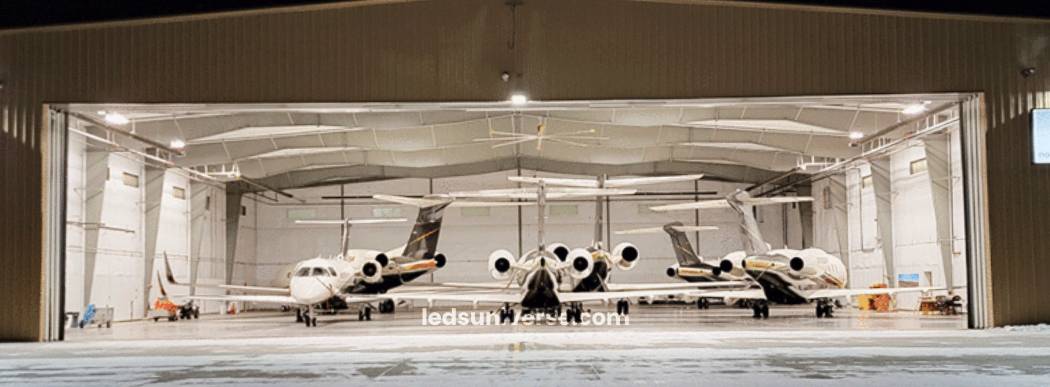
Lighting a hangar involves more than simply choosing fixtures and spacing them evenly. Several additional factors shape how the lighting system performs over time, affects energy consumption, and meets operational and regulatory requirements. Addressing these considerations during design and implementation can improve efficiency, safety, and long-term functionality.
Integrating Natural Light into Hangar Lighting Design
Incorporating natural light within hangar spaces helps reduce dependence on electric lighting during daytime hours. Skylights, translucent roof panels, or large windows are common architectural features that admit daylight, softening shadows and improving overall visual comfort.
Natural light integration works best when paired with advanced lighting controls that adjust electric light levels based on ambient daylight availability. This approach, known as daylight harvesting, allows fixtures to dim or switch off automatically when sufficient sunlight is present, reducing energy consumption without compromising illumination.
Daylight harvesting impacts fixture spacing and placement since electric lighting no longer needs to operate at full intensity throughout the day. Lighting zones can be created to control artificial light independently, enabling tailored responses to varying daylight levels across the hangar.
Selecting Fixtures for Durability and Maintenance Ease
Hangar environments expose lighting fixtures to harsh conditions, including dust, temperature fluctuations, humidity, and occasional physical impacts. These factors can reduce fixture lifespan or degrade performance if not properly addressed.
Choosing fixtures designed specifically for industrial or aviation environments is advisable. Such fixtures typically feature rugged housings, corrosion-resistant materials, and sealed designs to protect internal components from dust and moisture.
Maintenance accessibility also guides fixture placement. Fixtures should be installed in locations that allow safe access for cleaning, inspection, and bulb or component replacement. This consideration reduces downtime and maintenance costs over the system’s lifespan.
Impact of Temperature and Environmental Conditions
Lighting fixtures must be rated to operate reliably under these conditions. LED fixtures, for example, generate heat during operation, so their thermal management systems need to handle ambient temperature variations effectively.
Exposure to humidity or airborne chemicals may also affect fixture performance and longevity. Selecting fixtures with appropriate ingress protection (IP) ratings ensures resistance against moisture and dust ingress, preserving functionality.
Addressing Energy Efficiency and Operational Costs
Energy efficiency is a growing concern in hangar lighting design. Fixtures and spacing choices directly influence energy consumption, which affects operational budgets. Efficient LED technology combined with optimized fixture spacing can reduce electricity use while maintaining required lighting levels.
Integrating lighting controls such as occupancy sensors and timed schedules further enhances efficiency. These controls prevent unnecessary lighting in unoccupied areas, balancing illumination needs with energy savings.
Regulatory and Safety Guidelines
Hangar lighting designs must comply with aviation and occupational safety regulations to support safe and effective operations. These standards often specify minimum illumination levels, uniformity ratios, and acceptable glare limits tailored to different zones within the hangar.
Safety regulations also influence fixture selection and placement. Fire codes, for instance, may require that lighting fixtures installed near flammable materials meet explosion-proof or hazardous location standards. Such fixtures are designed to prevent ignition sources from causing fires or explosions.
Aviation Lighting Standards and Compliance
Aviation authorities and industry organizations publish guidance to ensure lighting supports safe aircraft movement and maintenance. Adhering to these guidelines helps avoid operational risks and maintains compliance during inspections.
Standards may detail requirements for emergency lighting, backup power provisions, and illumination continuity in critical zones. Ensuring that fixture spacing and lighting design meet these provisions protects personnel and equipment.
Coordination with Other Facility Systems
Lighting design must also consider integration with other hangar systems such as fire alarms, security, and HVAC. Coordinating fixture placement to avoid interference with sensors, sprinklers, or cameras ensures smooth operation across systems.
Additionally, lighting controls may be linked to building management systems (BMS) to enable centralized monitoring and adjustment. This coordination enhances efficiency and simplifies facility management.
Overall perspective
Achieving proper light spacing in hangar facilities involves careful consideration of many factors including fixture types, ceiling heights, activity zones, and environmental conditions. Applying established industry practices alongside detailed assessments and simulations helps create lighting systems that support operational efficiency, safety, and energy management. Thoughtful integration of natural light and maintenance planning further enhances long-term performance. By aligning fixture spacing with specific hangar needs and leveraging advances in lighting technology, facility managers can create well-illuminated environments that meet both functional and regulatory expectations.