
From urban underpasses woven into the fabric of city infrastructure to expansive highway tunnels that carve through mountains and beneath rivers, the presence of a thoughtfully engineered lighting system is fundamental to ensuring continuous visibility and a safe, comfortable experience for all tunnel users. Lighting in these enclosed spaces serves not just to illuminate but also to guide, protect, and facilitate smooth transitions between the brightness of the outside world and the relative darkness inside a tunnel. The challenge lies in balancing sufficient illumination to maintain clear sightlines while avoiding excess brightness that can cause glare or unnecessary energy consumption.
A pivotal factor in designing such systems is understanding the wattage requirements necessary to deliver appropriate illumination levels throughout the tunnel environment. Wattage, which quantifies the electrical power consumed by lighting fixtures, directly influences the amount of light produced but also shapes broader aspects such as operational costs, energy efficiency, and maintenance demands. Selecting an optimal wattage is far more complex than simply choosing the brightest fixtures; it involves a comprehensive consideration of how lighting performance aligns with safety regulations, environmental conditions, and economic constraints.
Estimating the correct wattage involves an interplay of multiple factors. The physical dimensions of the tunnel—its length, width, and height—determine the scale of the area to be illuminated and influence fixture placement and spacing. The choice of lighting technology, whether it be LED, high-pressure sodium, or fluorescent lamps, dictates the efficacy with which electrical power is converted into usable light. Additionally, the required illuminance levels, often expressed in lux, vary depending on tunnel zones such as entrances, interiors, and exits, each demanding different lighting intensities to accommodate human visual adaptation and safety standards.
Key Factors Influencing Tunnel Wattage Requirements
Tunnel Dimensions
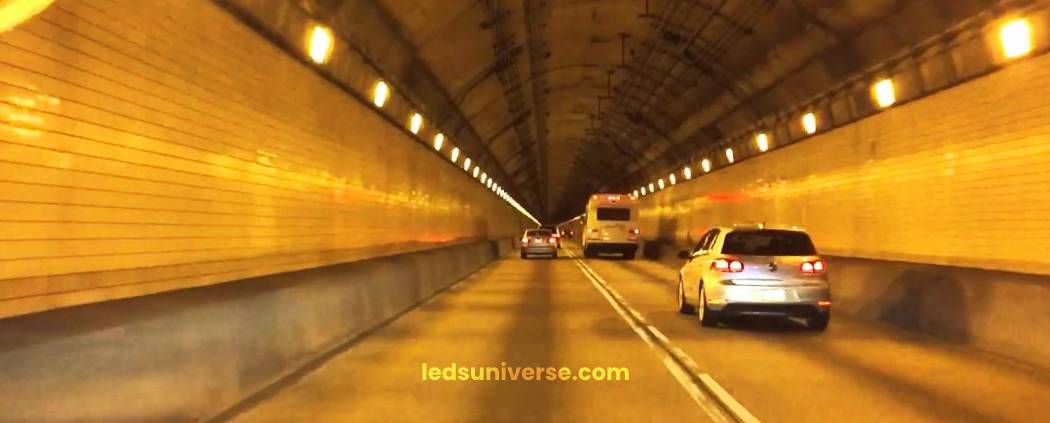
The physical size of the tunnel establishes a base for estimating the lighting load. Longer tunnels require a higher number of fixtures, while wider and taller tunnels need more powerful fixtures or denser spacing to achieve uniform light distribution. Length defines the longitudinal layout of lights, width determines lateral dispersion, and height affects the mounting distance and resulting light throw.
A narrow pedestrian tunnel might require fewer, lower-watt fixtures spaced closely together, while a three-lane vehicular tunnel will need high-powered fixtures to ensure that every area remains visible. Larger surface areas increase the total lumens needed to achieve the target lux level, which in turn elevates the total wattage requirement.
Type of Tunnel
Different tunnel types exhibit different illumination needs, shaped by usage patterns, user expectations, and regulatory recommendations. Road tunnels, especially those on high-speed expressways, require higher lux levels due to fast-moving traffic and abrupt lighting transitions. Urban road tunnels may have shorter lengths but experience dense, slow traffic and frequent entry/exit cycles.
Railway tunnels, while enclosed like road tunnels, often have different illumination standards depending on whether the lighting is intended for emergency access or routine inspection. Pedestrian and bicycle tunnels, with their human-scale traffic and reduced risk profiles, can be designed with lower wattage and lower lux levels, although uniformity and glare avoidance still matter.
Usage context guides how much lighting power is allocated. For example, an expressway tunnel may demand a lighting density several times greater than that of a pedestrian underpass, even if their physical dimensions are similar. This directly affects the total wattage required for each design.
Required Illuminance Levels (Lux)
Lux is the measurement of visible light over a defined area, and it is a common reference point in tunnel lighting specifications. International standards such as those from the Commission Internationale de l’Éclairage (CIE) and the European Norm EN 16276 provide detailed recommendations for various tunnel zones. These include entrance zones, threshold zones, interior zones, and exit zones.
The entrance zone typically demands the highest illuminance to compensate for the human eye’s adaptation from outdoor daylight to a darker environment. Threshold and transition zones gradually reduce the lighting intensity, helping users adjust to lower lux levels. Interior zones maintain a base level of visibility, and exit zones may mirror entrance zone intensities when transitioning back into daylight.
As lux increases, so does the number of lumens required, which translates directly to higher wattage if fixture efficiency remains constant. A design aiming for 300 lux will require three times more luminous output than one targeting 100 lux across the same surface, multiplying the energy demand unless highly efficient fixtures are used.
| Parameter | Typical Range / Value | Notes |
|---|---|---|
| Tunnel Length | 50 m – 1000+ m | Varies by project size |
| Tunnel Width | 3 m – 15 m | Single lane pedestrian to multi-lane road |
| Recommended Lux Levels | 50 – 300 lux | Depends on zone: interior, entrance, exit |
| LED Fixture Wattage Range | 40 W – 250 W | Based on fixture location and role |
| Wattage Per Meter of Tunnel Length | 10 W – 20 W | Typical for road tunnels |
| Wattage Per Square Meter | 4 W – 10 W | Depends on surface reflectance and usage |
| LED Efficacy (Lumens per Watt) | 120 – 180 lm/W | Higher values improve efficiency |
| Maintenance Factor (Lumen Depreciation) | 0.7 – 0.9 | To account for aging and dirt accumulation |
| Energy Savings Using LEDs vs HPS | 40% – 60% | Compared to older lighting technologies |
| Dimming/Adaptive Control Energy Savings | Up to 70% | During off-peak or low traffic periods |
| Fixture Spacing | 5 m – 15 m | Based on mounting height and beam angle |
| Mounting Height | 3 m – 10 m | Influences beam spread and wattage required |
Lighting Technology Used
The type of lighting fixture employed influences the watt-per-lumen ratio, which is central to determining how much electrical power will be consumed to achieve the required brightness. Traditional tunnel lighting systems often relied on High-Pressure Sodium (HPS) or Metal Halide lamps, which deliver respectable output but suffer from higher energy consumption and shorter life spans.
LED technology has transformed tunnel lighting by offering far higher luminous efficacy. LEDs typically range from 120 to 180 lumens per watt, compared to 70–100 lumens per watt for HPS fixtures. This allows for equivalent or improved lighting outcomes at substantially reduced wattage levels.
Fluorescent lighting, though used in some older tunnels, has largely been phased out in new installations due to its fragility and limited directional control. The transition to LEDs not only reduces total wattage but also enhances control options, enabling tunable brightness and integration with dimming systems.
Mounting Height and Spacing
The vertical placement of fixtures along the tunnel ceiling or walls determines the throw of light and impacts the wattage needed per unit. Higher mounting heights increase the distance between the light source and the illuminated surface, which can dilute intensity unless compensated by stronger fixtures or narrower beam angles.
Spacing between fixtures must ensure overlapping light cones to avoid dark zones. Closer spacing often reduces individual fixture wattage but increases the total number of fixtures, while wider spacing demands higher-output fixtures to maintain uniformity. The interplay between mounting height, fixture power, and spacing defines how wattage is distributed across the tunnel length.
Long tunnels with high ceilings typically require a blend of linear and point-source lighting, tuned to prevent glare and shadowing. The efficiency of wattage use hinges on how effectively this geometry is calculated during design.
Surface Reflectance and Tunnel Color
The reflectivity of tunnel surfaces impacts how much light is absorbed or reflected back into the environment. Lighter colored walls and ceilings with reflective coatings increase overall luminance and reduce the amount of wattage needed for the same lux level on the road surface. Dark or rough surfaces absorb more light, requiring higher wattage output to compensate.
Selecting finishes with high reflectance during tunnel construction supports lighting efficiency. This aspect works in tandem with wattage planning to optimize energy use without compromising visibility.
Environmental Conditions and Temperature Effects
Ambient temperature and environmental conditions influence the performance and efficiency of lighting fixtures. LED fixtures may experience slight efficacy changes depending on operating temperature, and heat dissipation needs impact fixture design and wattage ratings.
Humidity and dust accumulation inside tunnels also affect lighting output over time. Factoring in environmental conditions during wattage calculation can prevent underperformance and extend maintenance intervals.
Typical Wattage Range for Tunnel Lighting
Wattage Per Fixture
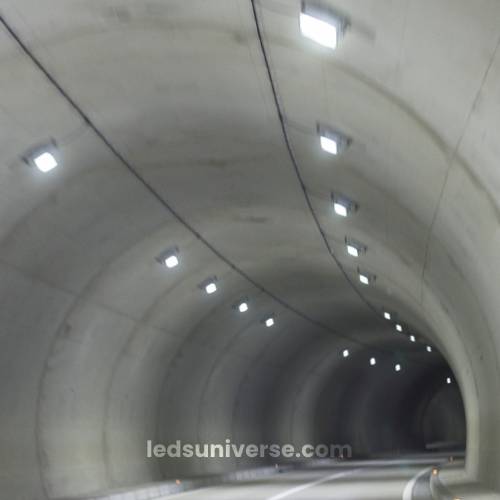
LED tunnel light fixtures come in a wide range of wattages, generally from 40 watts to 250 watts depending on their intended role within the lighting scheme. Fixtures at tunnel entrances, where high brightness is needed, often fall in the upper end of that range. Interior zones, which demand lower lux levels, may employ 60W to 100W fixtures spaced evenly throughout.
Some high-performance LED fixtures designed for large tunnels can exceed 300 watts, particularly if mounted at great heights or serving dual roles such as illumination and emergency signaling. The selection depends heavily on the combination of lux requirements, fixture efficiency, and coverage expectations.
Wattage Per Meter or Per Square Meter
A commonly used planning metric in tunnel lighting design is wattage per linear meter or wattage per square meter. For road tunnels, rough benchmarks suggest around 10 to 20 watts per meter of tunnel length in interior zones. Entrance zones can double or triple this rate due to heightened brightness requirements.
In terms of area-based planning, estimates of 4 to 10 watts per square meter are observed in many installations, varying based on surface reflectance, tunnel geometry, and lighting objectives. These figures serve as baseline references and are adjusted during detailed photometric planning.
Real-world examples illustrate this variability. A 500-meter highway tunnel using high-efficiency LEDs may deploy a lighting system rated at 80 to 100 kW total, while a smaller urban tunnel of 150 meters might use only 15 to 30 kW. Accurate wattage estimation always depends on customized layout modeling.
How to Calculate Total Wattage Needed
Step-by-Step Method
Calculating the total wattage needed for tunnel lighting starts with identifying the tunnel’s physical dimensions. Determine the length, width, and height of the structure to calculate the total area to be illuminated.
Next, select the required lux levels based on the type of tunnel and its zone designations. Entrance zones might require 300 lux or more, while interior zones may only need 75 to 100 lux. These values are multiplied by the surface area to estimate total lumens needed.
Once the total lumens are known, the lighting fixture type and efficacy must be chosen. LED efficacy typically ranges from 120 to 180 lumens per watt. Divide the total lumens by the fixture efficacy to estimate the total wattage required.
This value is then used to decide the number of fixtures, their spacing, and their mounting strategy. Simulation software or photometric calculations often validate this initial estimate and refine the layout.
Impact of Maintenance and Lamp Aging on Wattage Needs
Lighting output naturally decreases as fixtures age due to lumen depreciation. Wattage requirements calculated at the design stage must account for this decline to maintain minimum lux levels over time.
Designers include a maintenance factor, usually between 0.7 and 0.9, which increases the initial wattage to compensate for output loss over the fixture lifespan. Ignoring this factor can result in inadequate lighting and unsafe conditions before the next scheduled maintenance.
Strategies to Reduce Wattage Without Sacrificing Performance
Using High-Efficiency LEDs
One of the most effective methods to reduce wattage while maintaining or enhancing lighting quality in tunnels is the adoption of high-efficiency LED fixtures. Unlike traditional lighting technologies such as High-Pressure Sodium (HPS) or Metal Halide lamps, LEDs provide a far superior lumen-per-watt ratio. This means they produce more light output for every watt of power consumed, enabling the same or better levels of visibility with significantly less energy.
Beyond raw efficiency, LEDs offer enhanced control over light distribution. Their ability to precisely focus light beams reduces the amount of wasted or stray light, concentrating illumination exactly where it is needed. This beam control directly contributes to lowering overall wattage requirements since fewer lumens are lost in non-essential directions. In addition, LEDs have a long operational life, often exceeding 50,000 hours, which reduces the frequency of replacements and associated maintenance costs. Lower maintenance means fewer service interruptions and reduced labor expenditure, factors that further enhance the cost-effectiveness of LED systems despite their higher initial investment.
The transition from older technologies to LED can produce energy savings in the range of 40% to 60%. This range depends on several variables including tunnel size, existing lighting infrastructure, and control systems implemented. The upfront costs associated with LED fixtures and installation are often offset over time through these energy savings and lower operational expenses. Moreover, the consistency of LED performance and the ability to dim or adjust light output dynamically add further layers of efficiency and adaptability to tunnel lighting schemes.
Zonal Lighting Design
Zonal lighting is a design approach that segments the tunnel environment into distinct lighting areas, each tailored to specific visual needs. Instead of applying uniform wattage throughout the tunnel, lighting intensity is varied by zone, optimizing energy use while supporting driver safety and comfort.
The entrance zone, often the most challenging due to the eye’s adaptation from bright daylight to tunnel darkness, is typically illuminated with higher wattage fixtures to deliver intense brightness. As the driver progresses through the threshold and interior zones, wattage and illuminance levels are gradually decreased to levels sufficient for safe navigation but without unnecessary energy expenditure. Exit zones may mirror the entrance zone’s lighting to ease the transition back into ambient daylight.
This targeted allocation of wattage reduces overall power consumption by avoiding excessive illumination in less critical tunnel areas. Advanced lighting design software simulates human visual adaptation and environmental lighting transitions, guiding the specification of fixture wattages, spacing, and beam angles in each zone. By matching lighting output to specific conditions and user perception, zonal lighting enhances both efficiency and user experience.
Lighting Controls
Lighting controls represent a dynamic method for reducing energy use by adjusting lighting output in real time based on actual conditions rather than maintaining a fixed brightness level at all times. These control systems typically incorporate sensors, automation software, and dimming technologies that respond to traffic flow, ambient light, and time schedules.
Traffic-responsive controls modulate lighting intensity in response to vehicle presence and density. During periods of low or no traffic, such as nighttime or off-peak hours, the lighting system dims or switches to a lower wattage state, conserving energy while maintaining safety through minimal illumination. As traffic volume increases, the system ramps lighting back up to full intensity. This responsive strategy eliminates wasted wattage when tunnel use is reduced.
Ambient light sensors at tunnel portals detect the brightness of the external environment, allowing lighting levels inside the tunnel to adjust dynamically to daylight conditions. For example, on a bright sunny day, entrance zones might require higher wattage, while on overcast or dusk conditions, wattage can be lowered without compromising visibility.
When combined with energy-efficient LED fixtures, lighting controls can yield energy savings of up to 70% during off-peak periods. These systems also enable remote monitoring and fault detection, improving maintenance efficiency and extending fixture lifespan by reducing continuous high-intensity operation.
Use of Reflectors and Optics to Improve Efficiency
Optimizing the optics within tunnel lighting fixtures is an often-underappreciated but highly effective strategy to reduce wattage. Reflectors, lenses, and other optical components are designed to direct light output precisely onto desired surfaces, minimizing light lost to the ceiling, walls, or areas beyond the tunnel.
Fixtures equipped with advanced reflectors can achieve higher optical efficiency, ensuring that a greater percentage of the fixture’s lumens contribute to useful illumination. By controlling beam shape and spread, these optics reduce glare and light pollution within the tunnel and at portals. Efficient light placement means designers can select lower wattage fixtures to meet the same lux targets, decreasing total energy use.
Adjustable beam angles and asymmetric light distributions are valuable features in optimizing uniformity and reducing power consumption. Asymmetric optics direct light more towards the road surface and less towards vertical walls, improving the quality of illumination where it matters most. This precision reduces the need for overlapping light cones that often increase wattage requirements.
Innovations such as micro-prismatic lenses, TIR (Total Internal Reflection) optics, and secondary reflectors contribute to this refined light control. Over time, these technologies have been integrated into tunnel lighting fixtures to maximize lumen utilization, enhance visual comfort, and cut unnecessary wattage expenditure.
Optimizing Fixture Layout and Orientation
The placement and orientation of lighting fixtures directly affect how efficiently wattage is used. Strategic positioning ensures light is distributed evenly without creating dark spots or areas of over-illumination. Proper alignment prevents light from being wasted on surfaces where illumination is not needed.
Orientation also influences glare management. Fixtures angled correctly reduce reflections and direct glare towards the ground, improving visual comfort for tunnel users and allowing wattage to be minimized without sacrificing safety.
Maintenance Practices and Cleaning Regimes
Accumulated dust, dirt, and other environmental contaminants reduce fixture output and increase the wattage needed to maintain required lux levels. Effective maintenance, including regular cleaning and timely replacement of components, keeps fixtures operating at peak efficiency.
Predictive maintenance based on fixture performance monitoring prevents significant lumen depreciation, thereby avoiding the need to overcompensate with higher wattage. Efficient maintenance can reduce the overall energy footprint over a tunnel’s lifecycle.
Integration with Renewable Energy Sources
Although this does not reduce wattage per se, integrating tunnel lighting systems with renewable energy sources such as solar or wind power can offset electrical consumption. This strategy reduces the environmental impact and operational costs associated with high wattage use.
Energy storage systems can work with lighting controls to maximize renewable energy use during peak generation times, reducing grid dependency and enabling more sustainable wattage management.
Use of Smart Lighting and IoT Technologies
The incorporation of smart lighting systems and Internet of Things (IoT) technologies offers advanced control, monitoring, and analytics capabilities. These technologies facilitate real-time adjustments of wattage based on detailed environmental and traffic data.
IoT-enabled lighting networks can detect faults or inefficiencies, trigger maintenance alerts, and optimize wattage usage dynamically, further reducing energy consumption without compromising lighting quality or safety.
Regulatory and Safety Considerations
Ensuring that tunnel lighting systems adhere to established lighting codes and standards is foundational to creating environments that promote visual comfort, enhance safety, and minimize negative environmental impact. Compliance involves aligning lighting design with a framework of technical guidelines developed by authoritative organizations such as the Commission Internationale de l’Éclairage (CIE), the Illuminating Engineering Society of North America (IESNA), and various regional or national transport authorities. These bodies define minimum and recommended levels of illuminance, uniformity ratios, glare limits, and requirements for emergency lighting, all of which play an integral role in guiding wattage decisions and fixture selections.
Importance of Uniformity in Lighting Design
Uniformity in tunnel lighting describes how evenly light is distributed across the driving or walking surface. A tunnel with good uniformity prevents sharp contrasts between brightly lit areas and shadows, which can confuse or tire the human eye. When lighting is uneven, even a tunnel with high overall lux levels can create dangerous visual conditions because the abrupt brightness variations impair a driver’s ability to adjust their vision quickly and accurately. This contributes to increased fatigue and slower reaction times.
Designers mitigate these risks by carefully calculating fixture wattage, spacing, and beam angles to ensure a consistent lighting environment. By distributing light evenly, uniformity reduces the need to increase wattage solely to compensate for poorly lit areas. Efficient layout combined with appropriate wattage leads to safer tunnels that demand less energy.
Glare Control and Visual Comfort
Glare arises when a lighting fixture emits excessive brightness or is positioned such that its light falls directly into a driver’s eyes. Excessive glare can temporarily blind or distract users, significantly increasing accident risks within tunnels. Controlling glare involves more than just wattage management—it requires attention to fixture type, beam shaping, mounting height, and aiming angles.
Modern LED fixtures allow precise beam control, which helps limit glare by directing light only where it is needed and avoiding spill light that reaches users’ line of sight. The use of shielding accessories and asymmetric lenses further enhances this control. Managing glare enables designers to use fixtures with lower wattage without compromising perceived brightness or safety.
Adherence to Energy and Environmental Regulations
Energy codes and environmental guidelines have become increasingly stringent worldwide, encouraging the adoption of energy-efficient technologies and intelligent control strategies in tunnel lighting. Many regions offer tax incentives, rebates, or design credits to projects that achieve reduced energy consumption, particularly through the use of LED lighting and advanced control systems.
Regulatory frameworks often specify maximum allowable wattage densities (watts per square meter or per linear meter) alongside minimum lux and uniformity standards. Staying within these prescribed wattage limits while maintaining compliance requires thoughtful engineering and lighting design that balances performance with conservation goals. The drive toward sustainability has made energy-efficient tunnel lighting not just a technical objective but a regulatory expectation.
Emergency Lighting and Redundancy Systems
Tunnel safety extends beyond regular operation to emergency preparedness. Emergency lighting systems provide illumination during power failures or other incidents to guide occupants to safety and facilitate rescue operations. These systems are designed to operate independently of the main power supply, usually powered by batteries or generators.
Emergency lighting fixtures typically use low-wattage, high-efficiency LEDs that automatically activate upon loss of normal power. Although emergency lighting consumes energy only during outages, its specifications influence overall system design and wattage calculations because backup power infrastructure must support their operation.
Proper integration of emergency lighting ensures that wattage is allocated efficiently, avoiding unnecessary increases in baseline power consumption while fulfilling safety requirements. Designing for redundancy and reliability is a fundamental safety principle that complements energy management strategies.
Environmental Impact and Mitigation of Light Pollution
Although tunnels are enclosed structures, light can escape from their portals or ventilation shafts, potentially causing light pollution in surrounding areas. Light pollution manifests as unwanted glare, skyglow, or trespass light that affects nearby residential areas, wildlife habitats, and the natural night environment.
Efficient wattage planning helps minimize light pollution by reducing excessive lumen output and focusing light precisely within the tunnel boundaries. Using lower wattage fixtures equipped with advanced optics limits spill light. Additionally, directional shielding and portal design features prevent light from escaping upward or sideways.
Addressing light pollution aligns with broader environmental sustainability goals and enhances community relations by preventing disturbances caused by stray tunnel lighting. By combining wattage efficiency with careful optical design, tunnel lighting systems can meet operational needs while preserving the surrounding environment.
Conclusion
Estimating how many watts are needed to light a tunnel efficiently requires a detailed understanding of tunnel characteristics, usage, and lighting technology. Wattage is not a fixed value but a result of calculations rooted in physical dimensions, lux requirements, fixture performance, and layout geometry.
Using high-efficiency LEDs, zonal lighting schemes, and smart controls provides a pathway to meet lighting goals while reducing energy demand. Accurate wattage planning supports visibility, operational cost savings, and equipment longevity. Tailored lighting design, rather than generic estimations, ensures that tunnel lighting systems perform as intended in both day-to-day use and during emergency conditions.